Convenience Isn’t Healthy: Chronic Illness and Diet

When I was diagnosed with fibromyalgia three years ago, my diet was all about convenience. I came to the conclusion that eating healthily was just a luxury that I could no longer have. I tried to generally to choose healthier convenience food options. For example, a whole-grain cereal instead of refined grain, or a low-fat frozen lasagna instead of full-fat. A typical day looked like this:

Breakfast: Multigrain Cheerios with a banana (251 Calories)

Snack: Yogurt (115 Calories)

Lunch: sandwich with deli meat, granola bar, carrot sticks (348 Calories)

Snack: Trail mix (352 Calories)

Dinner: Spaghetti (store bought pasta sauce) (344 Calories)

Snack: Slice of Toast (69)

Total: 1538 Calories (Calculated at Super Tracker www.supertracker.usda.gov)

So, calorie-wise not so bad. However, as any nutritionist can tell you, calories are only a small part of the nutrition story. If I ate 1500 calories in chocolate, it would only be delicious, not healthful.

What was wrong with my diet?

  • Grain heavy: I had a total of 240 g of grains, which is over the USDA recommendation of 170g or 6 oz for a woman my age. While grains provide benefits like fiber, eating too much of this food group can lead to weight gain.
  • Protein policy: in total, 16% of my food intake was protein. While this is within the acceptable range set by the USDA, dieticians recommend your protein daily allowance should be calculated using this formula: 0.8 x weight in kg (easily converted using any online converter). For me, this comes to 52 g per day. Protein should be distributed between all meals to help sustain energy. In my case, breakfast and dinner were primarily carb based. http://www.livestrong.com/article/343966-how-to-calculate-protein-rda/
  • Sugar high: in total, I had over 90 g of sugar! The World Health Organization recommends that less than 10% of your daily energy consumption should come from sugar, with added health benefits coming from less than 5%, or approximately 25 g. My sugar total was almost 4 times that much! This is bad news for my blood sugar levels and weight management, never mind long-term health consequences. http://www.who.int/mediacentre/news/releases/2015/sugar-guideline/en/
  • Nutrition deficient: I had less than four servings of fruits and vegetables (banana, carrots, raisins, tomato sauce). This means I was getting an inadequate amount of micronutrients (vitamins and minerals), and losing out on the many other benefits of these healthy foods such as antioxidants and fiber. Furthermore, the servings I did have were primarily starchy vegetables or high glycemic fruits, which only added to my blood sugar concerns and weight gain.

Overall, I gained 20 pounds in a year and went up a dress size. I was also permanently fatigued. For anyone coping with chronic illness, sustained energy is a significant challenge. Balancing macronutrients – carbs, protein and fat – along with factors such as fiber and sugar, is important for preventing spikes in blood sugar that inevitably lead to energy crashes. According to the Mayo Clinic, based on a 2000 calorie/day diet, the total daily allowances should be:


Nutrient Percentage Grams
Carbohydrates (vegetables, fruits, grains) 45-65% 225-325
Fiber   Female: 22-28; Male 28-34
Sugar   Female: 24g; Male: 36
Protein 10-35% 50-175
Fat 20-35% 44-78
Saturated Fat 7-10% 16-22

http://www.mayoclinic.org/healthy-lifestyle/nutrition-and-healthy-eating/in-depth/how-to-eat-healthy/art-20046590?pg=1

Maximizing micronutrients (vitamins and minerals) is also key healthy eating. Adequate intake of nutrients like Iron and B vitamins have been linked to improved energy levels, while others like Vitamin D and Magnesium help reduce chronic pain. In addition, chronic illnesses like fibromyalgia have been linked to high rates of oxidation, so eating antioxidants is important to counteract these effects.

The USDA recommends at least 2 ½ cups of vegetables per day for women and 3 cups for men, and 1 ½ cups of fruit per day for women and 2 cups for men. The USDA recommendations have been critiqued, which is another post altogether, but provide guidelines that are much healthier than the Standard American Diet www.choosemyplate.gov.

Homeopathic Remedies for Muscle Adhesions in Chronic FM Pain! Why not?

At a recent appointment to my naturopath,  to the wonderfully named Dr. Love, the topic of recurrent muscle pain flares came up. Anti-inflammatory interventions and nervous system calming remedies had not broken the cycle of muscle pain I experience. My pain predominantly occurs in my upper back/shoulder blades on either side and my glute muscles/SI joints. Even though I stretch and strengthen, which helps, I have not broken out of these painful cycles. My naturopath asked what my osteopath had to say about whether my muscles are particularly restricted and not very responsive to treatment. My osteopath said that my thoracic spine and pelvis area were particularly restricted.

Dr. Love explained that tightness and restriction can occur when muscles are contracted for a long period of time, leading to adhesions in the connective tissues. Adhesions are a form of scar tissue that cause connective tissues to stick together in a way that restricts normal movement and function. There is evidence that adhesions in the fascia (a network of connective tissue throughout the body, like a soft skeleton) can contribute to fibromyalgia pain.*
Dr. Love felt that it might be helpful to give me some support for breaking down adhesions, to complement the work of my osteopath and physiotherapist. She prescribed a homeopathic remedy with two ingredients. The first was theosinaminium, which is a derivative of mustard seed oil. It is used as an internal solvent for dissolving scar tissue, fibroids, tumurs, and adhesions.** The other ingredient was silicea, which  “can stimulate the organism to re-absorb fibrotic conditions and scar-tissue”.***
In the last month, I have experienced decreased night time back pain, and greater resiliency in my upper back/shoulders (for example, I have been able to type this entire post without pain, when usually I use voice-t0-text technology). I am not sure if this supplement is the only reason, but since it has no side effects, I am happy to continue to take it to see if it will help me further!

*http://chronicfatigue.about.com/od/glossary/g/Adhesion.htm

**http://www.webhomeopath.com/homeopathy/homeopathic-remedies/homeopathy-remedy-Thiosinaminum.html

***http://abchomeopathy.com/r.php/Sil

Exercise DVDs for FM You Can Actually Do!

If you have fibromyalgia, you may be tired of reading all about how exercise will improve your quality of life.

There are zillions of articles on the internet citing studies that demonstrate how moderate exercise reduces pain and improves other FM symptoms. I don’t know about you, but the last time I went to try a yoga class, I spent the next three days in bed from a major flare up. Or the last time I jogged to catch a bus, walked in the snow, or did anything else remotely aerobic – it didn’t turn out so well.

So how exactly are we supposed to get this exercise, in a way that improves our FM, instead of triggering it? Previously I wrote about a tai chi dvd for arthritis with Dr. Lam, which is very gentle, yet therapeutic. However, sometimes you need several options to entice you into a work-out! Recently, I came across an excellent resource for FM exercise DVDS at www.myalgia.com. They are produced by the Fibromyalgia Information Foundation, a non-profit run by doctors and researchers at the Oregon Health and Science University. This means that all the exercise routines are designed by reputable instructors and approved by FM medical specialists from the University.

There are 4 DVDs in total: Yoga and Pilates, Stretching and Relaxation, Strength and Balance, and Aerobic Exercises. Here is the best part – along with the instructor, each video includes three FM patients demonstrating the movements. Each patient follows a program at a different level of difficulty, with modifications for more severely affected patients, to ‘medium’, to ‘advanced’ movements. I have tried the Yoga and Pilates DVD and really enjoyed it. 1 can pick which ‘level’ to do based on how I feel. Over time, I can feel myself improving and following the more ‘advanced’ level program more often. I hope to move up to the strength DVD. I previewed it – it is older than the Yoga DVD and has awesomely cheesy music! If you are looking for an at-home exercise routine (maybe to fulfill your New Year’s Resolution for 2015), I highly recommend these DVDS. They are reasonably priced and thoughtfully produced for FM patients.

* Please note this is an independent review, and I have no affiliation with the organization.

The Magic Bullet of Nutrition?

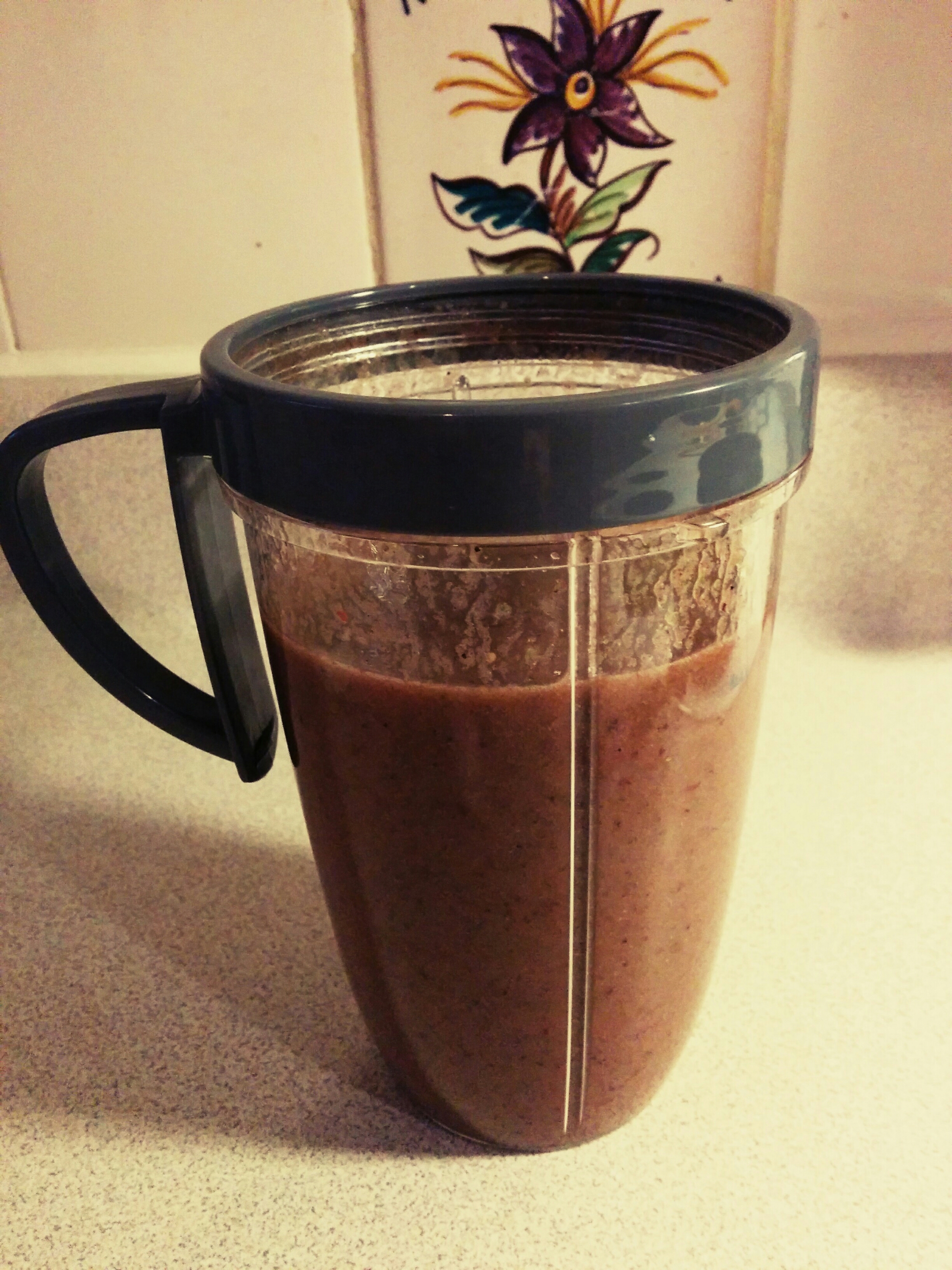
image

image

Do you remember the part in the Father of the Bride when the marriage is almost cancelled over a blender? The groom-to-be gifts his fiancee with a blender and she is furious because she takes it to mean he expects her to be a 1950s housewife!
My significant other remembers this and so it was with great reluctance that he bought me the birthday present that I asked for – a Nutribullet blender. But he wrote me a very romantic letter to make up for it!
I’m actually kind of a nutrition nerd so it’s a great gift from my point of view. I also have high hopes that it’s going to make me feel better.
First of all, what is a Nutribullet blender? It is a high powered blender that makes “a nutrient extracted drink designed to feed your system as many servings of easily absorbable fruits and vegetables as possible”.
I got the Nutribullet Pro blender. It comes with four BPA free plastic containers so you can choose the size of smoothie you want to make. The containers have lids for storage so you can take your smoothie with you. The blender has a powerful 900w motor so the smoothie is ready in seconds. The idea is to make the nutrients as bioavailable as possible by fully breaking down the veggies and fruits – and taking stress off the digestive system. Unlike juicing you get all the fibre in addition to the nutrients. The maker claims the Nutribullet doesn’t oxidize the smoothie as much as other blenders because of its speed and cyclonic action … But you have to drink it right away.
The blender comes with smoothie recipes, called Nutriblasts. The basic formula involved 2 cups of leafy greens, 2 cups of fruit, and a ‘boost’ of nuts or seeds, like chia seeds or almonds. It also comes with a recipe book that includes recipes for FM! It’s pretty affordable at around $115.
The best thing about the Nutribullet is the convenience. When I first got fibromyalgia I gave up on eating healthily because of all the work involved in cooking whole foods from scratch. As time has passed I have learned that the only way to manage this condition effectively is through lifestyle choices – making time for gentle exercise (walking, yoga, qi gong, tai chi), taking supplements, going for body work appointments (massage, physio, osteopath) … and eating well, most importantly. But my healthy eating choices have to be quick and easy to be viable. Throwing a cup of leaves, a banana and frozen berries into a plastic cup meets these criteria! I used to try to use my giant blender but it’s hard to clean, heavy and made more dishes. Most of the time it ended up in the fridge for a week with quickly separating smoothie servings left in it.
Although this particular product works for me, I think whether you use an old Oster work horse blender, a juicer or a vitamix, green smoothies are one if the best things you can incorporate day to day if you have chronic pain and fatigue.

Supplement Pain and Low Energy Away: Naturopathic Protocol Part 3

1406058434805

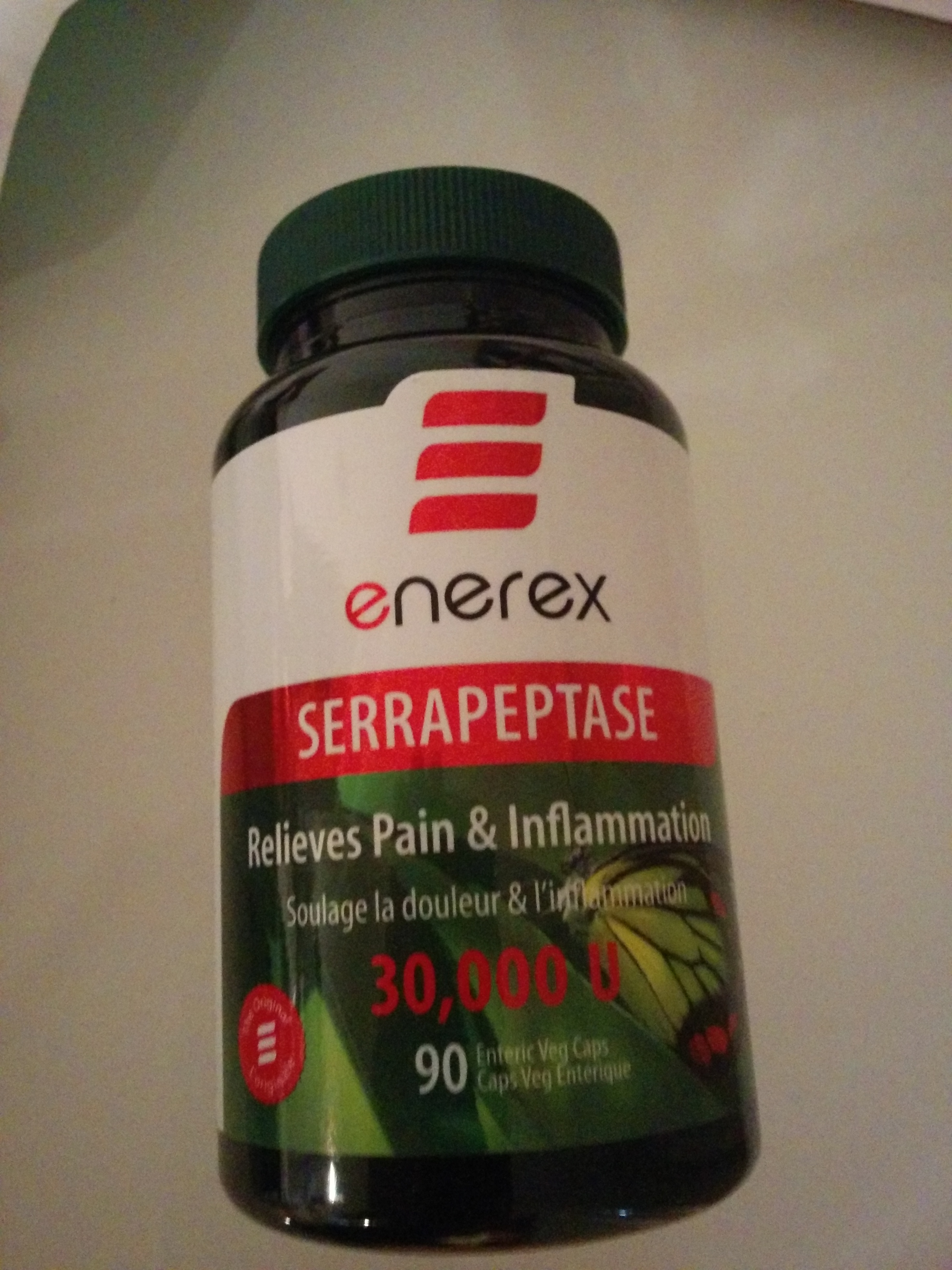
Serrapeptase

I had an appointment with my naturopath last week. She was happy with my progress so far. My stomach issues have been much better.  Last August, I did a food sensitivity test in combination with a food diary, and identified my trigger foods. After I eliminated these triggers, which included eggs, wheat/gluten, cruciferous veggies (broccoli, cauliflower, brussels sprouts) and beef, my gastrointestinal tract is been much happier. In addition, I also take a probiotic, an anti-yeast/anti-microbial supplement (Genestra Candicin) and intestinal support supplement (Metagenic Glutagenic with glutamine, aloe and licorice). This cocktail helps to keep things humming along nicely! If you’d like to know more, I wrote about it in a previous post: naturopathic protocol part 1. In the second phase of my protocol, my naturopathic prescribed D-ribose. I take 5 g daily, which is lower than the 10 to 15 g advised by some leading CFS/FMS researchers, but I found a higher doses gave me headaches. So far I have seen an increase in my energy levels – about 25%. At my most recent appointment, the naturopath wanted to address my pain issues more directly. She added a proteolytic enzyme called serrapeptase, which acts as an anti-inflammatory and pain killer. This enzyme, which was originally found in bacteria from the guts of silkworms, digests protein, and helps silkworms to break down their cocoons! In the human body, it reduces swelling by promoting drainage, inhibits pain-inducing amines called bradykinins, and breaks down dead tissue like plaques or adhesions.* It has been used in Asia and Europe for over 25 years and is backed by a significant body of research. Although it has not been studied specifically for use in treating fibromyalgia, it has been found to be effective for sprains and torn ligaments, carpal tunnel syndrome, post-op swelling, clots, arteriosclerosis and upper respiratory infections.* I think that this might be particularly effective for myofascial pain syndrome, which is characterized by trigger points in muscle groups, and frequently associated with fibromyalgia. Anti-inflammatories are more effective for myofascial pain syndrome than fibro, and I can imagine that in addition to its anti-inflammatory component, serrapeptase might help also help break down the adhesions and trigger points. My pain has been significantly reduced since I began taking it twice daily. The only tricky part is that you have to take it on an empty stomach so that the enzyme is absorbed into your bloodstream and not used up in the gut digesting protein in your food. My naturopath also prescribed an additional energy enhancing supplement which contains acetyl-L-carnitine and Coenzyme Q10. Both of these supplements have been found to improve fibromyalgia symptoms in recent studies. This past October, Spanish researchers published a study demonstrating clinical and molecular benefits from CoQ10 supplementation. This randomized, double-blind, placebo-controlled study included 20  participants diagnosed with fibromyalgia. Half of the subjects were given 300 mg of CoQ10 daily for 40 days. These subjects were found to have significantly reduced pain, fatigue and morning tiredness. Interestingly, these clinical results were corroborated by molecular findings. The researchers found recovery of inflammatory biomarkers, levels of antioxidant enzymes, mitochondrial function and expression of a gene called AMPK. This gene codes for an enzyme that plays an important role in cellular energy metabolism. The study concluded that CoQ10 may be beneficial for fibromyalgia sufferers. In 2007, researchers published a study that looked at the effects of acetyl l-carnitine supplementation in patients with fibromyalgia. Over 100 patients were enrolled in the study. The active group were given over 1000 mg of acetyl l-carnitine daily plus 1 intramuscular injection of 500 mg weekly for 10 weeks, and the control group was given a placebo. Researchers found significant benefits in the active group from supplementation, specifically in reduced tender point pain, overall musculoskeletal pain and depressive symptoms. They concluded that acetyl l-carnitine is a helpful supplement for pain and mental health in fibromyalgia patients. I am taking different amounts of these two supplements than were studied. My formula includes 80 mg of CoQ10 and 100 mg of acetyl l-carnitine daily. I have only been taking this supplement for a few days, so I will have to report back later on any effects I feel. If I don’t see any effects, then maybe I will have to consider taking a higher dose! Both of these supplements are involved in cellular energy metabolism, which is interesting because the primary theory at the moment is central sensitization of pain processing. Fibromyalgia must be some kind of crazy jigsaw puzzle – but obviously it has far-reaching effects in our bodies. Anyway, that’s enough research nerding for one day! Have a happy day! Rossini M, Di Munno O, Valentini G, Bianchi G, Biasi G, Cacace E, Malesci D, La Montagna G, Viapiana O, Adami S. ‘Double-blind, multicenter trial comparing acetyl l-carnitine with placebo in the treatment of fibromyalgia patients’. Clin Exp Rheumatol. 2007 Mar-Apr;25(2):182-8. . **Mario D. Cordero, Elísabet Alcocer-Gómez, Manuel de Miguel, Ognjen Culic, Angel M. Carrión, José Miguel Alvarez-Suarez, Pedro Bullón, Maurizio Battino, Ana Fernández-Rodríguez, and José Antonio Sánchez-Alcazar. Antioxidants & Redox Signaling. October 20, 2013, 19(12): 1356-1361. doi:10.1089/ars.2013.5260. *’All about supplements: Serrapeptase – the natural anti-inflammatory’. Life Extension Magazine, September 2003. Accessed November 14, 2013. http://www.lef.org/magazine/mag2003/sep2003_report_aas_01.htm ‘Studies show benefit of CoQ10 in fibromyalgia’. Natural news, April 26, 2013. Accessed November 18, 2013. http://www.nyrnaturalnews.com/pain-2/2013/04/studies-show-benefit-of-coq10-in-fibromyalgia/

Nondrug, Trigger Point and Alternative Fibromyalgia Treatment

“The good news is that many therapies can ease this type of muscle pain, and for the most part, their side effects are minimal. Various movement therapies and nourishing supplements may reduce chances that trigger points will develop in the first place. Consider trying out a variety of the alternative treatment options described below, based on your needs.” Fabulous reference for non-drug options!

Nondrug, Trigger Point and Alternative Fibromyalgia Treatment.

Back to class: Mindfulness Based Stress Reduction

Meditation

Meditation (Photo credit: holisticgeek)

I am about to go to the second class of my Mindfulness Based Stress Reduction (MBSR) course. In the summer I wrote several posts on reading the Mindfulness Solution to Pain and practicing meditations described in the book.  Mindfulness involves “paying attention on purpose, in the present moment, and nonjudgmentally, to the unfolding of experience moment to moment”, as defined by Jon Kabat-Zinn, founder of the MBSR program. I also posted on research showing how effective mindfulness practice is for chronic pain.

I have really enjoyed doing the assigned “homework” from the first class. The first part was to do a 30 minute body scan from the course CD. (A body scan meditation involves paying attention to different parts of your body for a few moments and observing the sensations you feel). This is the longest meditation I’ve ever done. The practices I have done before were breath meditations, usually only for a max time of 20 minutes. I really like the body scan because I am able to really focus and feel more in touch with what’s going on in my body. I feel like my mind wanders less then when I am doing breath meditation (focusing on your breath). It is very relaxing to have a break from your mind!

Of course, I’m not always in such a good mood when I go to meditate. Before I was meditating when I felt like it, which was usually when I already felt relaxed or calm. The idea of the MBSR program is that you commit to practice seven days a week for eight weeks – as Jon Kabat-Zinn says “you don’t have to like it, you just have to do it”. It sounds a little bit rigid but it’s really important while you are trying to establish meditation has a habit. When you go to practice and you realize you are stressed, agitated, and your mind is wandering everywhere, focusing can seem like the last thing you want to. But that’s when you realize how helpful mindfulness can be! It doesn’t necessarily produce calm every time. It does give you a chance to observe what is going on inside your head. Usually that helps me to figure out a more helpful way of dealing with things then spazzing out, or to recognize stressful patterns of thinking.

One thing I do have to keep working on is not to judge myself when I realized my mind has wandered off or I’m not feeling calmer/better after meditating. As the facilitator of my class says “if you have a mind, it’s going to wander”. You really can’t get into mindfulness with expectations about what it “should” do for you.

The other part of our homework was to try to eat mindfully at least once everyday. It’s really nice to realize how many sensations and moments are available to you if you stop to enjoy them. I love food, cooking and eating. When you realize how many times you just wolf down delicious meals… I always feel like my life is so limited now that I have fibromyalgia, so I think it’s really good for me to realize how much I do have around me to enjoy!

Natural Treatments for Fibromyalgia: Why you should Try D-Ribose

Natural Treatments for Fibromyalgia: Why you should Try D-RiboseThe first part of my natural treatment protocol for FM was focused on healing my digestive tract (which I described in a previous post). The second phase is to begin incorporating d-ribose.

D-ribose is a sugar produced in the body and taken to alleviate fatigue and pain in fibromyalgia and chronic fatigue syndrome. Here’s what the research says about this supplement.

The biggest advocate for d-ribose is Dr. Teitelbaum, a prominent doctor in the field of chronic fatigue and fibromyalgia medicine. He has developed a program for treating both conditions which includes d-ribose as a core component. Dr. Teitelbaum contends that CFS/FMS is caused by an “energy crisis” in the body, leading to a cascade of different symptoms like fatigue, pain, sleep disturbance, among others. One root cause of the energy problem, he argues, is that the ability of the mitochondria in your cells to generate energy is suppressed. Mitochondria produce the energy, called ATP, used by your cells to carry out all their functions. D-ribose is essential to the production of ATP. Therefore, taking additional D-ribose should help to support mitochondrial function and improve energy output in fatigued patients. (If you are interested in learning more, check out a much longer discussion found on Dr. Teitelbaum’s website here).

The evidence? Dr. Teitelbaum has authored a few pilot studies that have demonstrated some promising results. The most recent study was an open-label study published in 2012. In this multicenter study, 257 patients diagnosed with CFS/FMS were given d-ribose (5 g three times daily for three weeks). Patient symptoms were assessed in terms of subjective change in energy, sleep quality, mental clarity, pain level, and global sense of well-being, and compared to their pre-study baseline. Significant improvements were found; specifically a 61.3% increase in energy, 37% increase in general well-being, 29% improvement in sleep, 30% improvement in mental clarity, 15.6% decrease in pain.

Sounds great, right? There are some limitations to the study. First of all, there was no placebo group so we don’t have a sense of how much a placebo effect might have impacted the results. Secondly, it was quite a short study so long term effects were not captured in the results. Third, I always feel a bit suspicious of studies that lump chronic fatigue and fibromyalgia together because a lot of recent research has demonstrated different causes for the two conditions and mixing them together might conflate the results.

Personally, I have found D-ribose a helpful aid to improving my energy. I would say that it improves my energy by 15-20%. I take 5mg in the morning, and sometimes an additional 5mg in the afternoon. When I stopped taking it, I noticed a worsening of my afternoon brain fog and fatigue. I didn’t notice a worsening of pain or sleep however. I also appreciate that it is easy to take –  just mix a spoonful with a glass of swater- instead of yet another pill. It is also relatively inexpensive.

As with everything fibromyalgia or chronic fatigue related, it is an individual experience, so you have to try it for yourself. In the case of d-ribose, I think it is definitely worth a try!

Check out other great posts on the Fibro Friday Linkup!

References

Teitelbaum JE, et al. “Treatment of chronic fatigue syndrome and fibromyalgia with D-ribose – An open-label, multicenter study.” The Open Pain Journal. 2012, 5,32-37