I don’t feel your pain – Ideas – The Boston Globe

Zyp Czyk's avatarEDS and Chronic Pain News & Info

I don’t feel your pain – Ideas – The Boston Globe

For all that modern medicine has learned about disease and treatment, it’s alleviating pain that still lies at the heart of the profession. And in recent years, the notion of treating “pain” as its own entity has been rising to the forefront in medicine. Pain management now has its own journals, conferences, clinics, and specialists, and pain relief is sometimes referred to as a human right.

In September, a coalition that includes the FDA, the CDC, and the NIH is expected to release a long-awaited “National Pain Strategy.”

But as pain rises on the agenda for clinicians and patients, research is uncovering some unsettling facts about how it really affects people. First, not everyone experiences pain similarly

View original post 787 more words

Part 2 of How to outsmart your foggy brain

Supplements for Adrenal Fatigue

So last week I wrote about my recent energy crash and brain fog (which seems to go along with digestive symptoms). I think it has to do with starting school courses again (two online classes). At any rate, the things I tried last week improved my coping, but not enough to ward off the zombie fatigue permanently. So I decided to add some more supplements to the mix. I rechecked my CFS bible ‘From fatigued to fantastic’ by Dr. Teitelbaum and realized I’ve been overlooking adrenal fatigue. He recommends Vit C (500-1000mg), Vit  B5, also known as pantothenic acid (100-150 mg) and licorice (200-400 mg).
I got all three (but my pantothenic acid supplement was 250 mg). I didn’t sleep well but my energy was much better sustained during the day! The downside was the side effects (diarrhea), probably from taking more than Teitelbaum recommended… And my sensitive tummy! Obviously I need to take less and even try to work up to the recommended dosage. Hope that gives someone out there more tools to add to their arsenal!

Update: after two weeks my energy has been much better, so my adrenals must have been zapped!

How to outsmart your foggy brain

Since I began taking two classes my brain fog has become more of a problem. It got really bad this past weekend – I must have had a crash. If I’m honest I was pretty scared and thought seriously about withdrawing. My fibromyalgia first started when I was in school last time- although back then it was a full time graduate programs. I was very worried about all my symptoms, but of course I thought they would get better once I was able to take a break. They didn’t. I have been so grateful for my fairly predictable, although limited, energy supply; having low energy and brain fog is not my most difficult symptom. I know for many people with FM and CFS have it much worse in the fatigue department than I do. If I take my sleeping pills, sleep for 11 hours and don’t over schedule myself, fatigue does not usually bother me. This most recent crash made me worried that if I push myself too hard at school again there may be no going back.
So, I tried everything I could think of and seem to have been able to recover my energy almost back to normal levels. The most helpful thing was taking a daily scoop of my protein powder (25 g) in a berry and greens smoothie. I have also doubled my D-ribose supplement amount to 5 g twice daily.
I have also stopped trying to push through my fatigue and instead have been listening to guided relaxation tracks when I feel a dip. Here are a couple of sites you can stream from for free:

http://www.dartmouth.edu/~healthed/relax/downloads.html

http://medweb.mit.edu/wellness/resources/downloads.html

Finally, I have been setting two alarmfor each evening to get to bed on time. One of them just went off so I should cut this short! Hope this gives some ideas if you’re looking for them!

Discovery of key genetic link between chronic pain conditions – Medical News Today

Discovery of key genetic link between chronic pain conditions – Medical News Today.

Wow. It’s so interesting that pelvic pain and musculoskeletal pain and IBS are hereditary! My father has IBS and his mother was considered a hypochondriac because of undiagnosable pain… Hmmmm. On my mother’s side there is only Reynaud’s syndrome but that wasn’t included. This goes a long way to bolstering these diagnoses as legitimate, and pointing towards reasons behind abnormally sensitive pain processing in some of us.

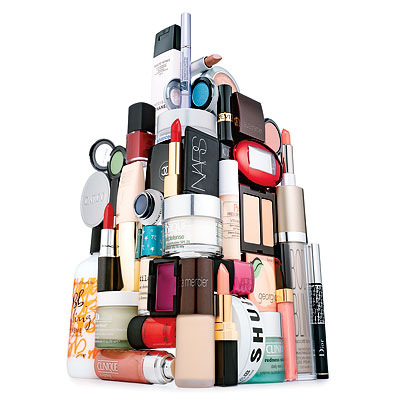
There’s formaldehyde in my conditioner.

image

A pound of prevention is worth an ounce of cure, right? When it comes to my health, I try to proactively live a healthy lifestyle and avoid anything risky. That’s just common sense. These days, many people, especially those of us living with chronic illness, devote a lot of time and energy to our health and wellbeing.

When it came to personal care products, I usually bought them in the drugstore. I used to think that government safety regulation prevented anything too harmful from being used in these products. That was before I began reading ‘There’s Lead in your Lipstick’ by Gillian Deacon. I recently developed several skin conditions, like scalp dermatitis and millia, which made me want to look for some alternatives. Then I learned that there was (is) formaldehyde in my conditioner (DMDM hydantoin). My jaw dropped open for a good 30 seconds. How is this possible?

Apparently there is virtually no industry regulation on what ingredients companies can put in their products.* Known toxic contaminants and carcinogens, like phthalates, 1, 4-dioxane and lead, are present in common cosmetics. According to Deacon, there are more than 85 000 ingredients used in the personal care industry. Of these, fewer than 15% have been studied for their human health impact. Worse, the interactions between multiple chemical ingredients haven’t been studied at all. Most disturbingly, the accumulation of chemicals in the body, and the long term health consequences, are unknown. But facts like the presence of parabens, a common cosmetic additive, in 19 out of 20 breast tumors suggest a startling relationship.**Other research demonstrates links between ingredients or contaminants and sperm damage, low birth weight in girls, and abnormal reproductive organ development in male infants.*

Gillian Deacon recommends looking up your personal care products on the Environmental Working Group’s Skin Deep database, a comprehensive metric of the chemical hazards in thousands of common personal care products. Drawing on multiple government, industrial and academic research databases, Skin Deep puts products on a scale of 1-10 in terms of chemical hazards, based on the ingredients.

Here are 3 of my products:

Selsun Blue Dandruff Shampoo, Medicated Treatment
Overall Score: 7 (high concern)
Particularly for cancer, allergies and immunotoxicity
Harmful ingredients: Selenium sulfide (8), Cocamide DEA (7), Fragrance (8), DMDM hydantoin – formaldehyde releaser (7).

Tresemme conditioner – smooth and silky
Overall score: 5 (moderate)
Particularly: allergies and immunotoxicity, endocrine disruption
Harmful ingredients: fragrance (8), Lilial (7), Geraniol (7), DMDM hydantoin – formaldehyde releaser (7)

Covergirl clean foundation for sensitive skin
Overall 5- moderate
Allergies and immunotoxins, reproductive toxicity, endocrine disruption
Harmful: Propylparaben (10)(!) methyl-paraben (4), PEG (3)

I don’t think I can continue to douse myself in toxic chemicals! I’ll be looking up alternative products in my health food store on Skin Deep to make sure they aren’t toxic. (Be careful of greenwashing – ‘organic’ or ‘natural’ products may be misleading). Always check the label. Apparently my skin conditions may be a reaction to these products. Furthermore, my immune compromised fibromyalgia body doesn’t need any more challenges!

*Skin Deep
**http://www.gilldeacon.ca/projects-lipstick.php